When 80% of the world's Christmas spirit emanates from Yiwu, China, every pulse in its logistical supply chain precisely forecasts the global trade climate. The 2025 peak season reveals more than the usual frenzy; it showcases a profound transformation—a global supply chain actively evolving from reactive "stress responses" to proactive "intelligent adaptation" under the combined pressures of tariffs, technology, and shifting demand.
The holiday season is the annual stress test for global logistics. However, the test for 2025 has changed. The scene is now a study in contrasts: Chinese factories working overtime by mid-year for year-end holidays—an "intense production during a cool peak season"—while consumers in Europe and the US receive last-minute gifts on Christmas Eve, sorted by robotic warehouses and delivered the same day. This juxtaposition of extremes outlines a systemic reshaping of international logistics from source to final delivery.
*****************************************************************************************************************************************************************************************************************************************************
I. The Upstream Shift: From "Peak-Season Rush" to "Strategic Window-Gaming"
Traditionally, the climax of Christmas logistics occurs in Q3. Yet in 2025, customs data indicates that the export peak for Yiwu's Christmas products shifted to the second quarter, with June exports accounting for half of the H1 total, followed by sustained highs in July and August. This "time shift" is no accident; it's primarily driven by exporters' strategic efforts to capitalize on a critical tariff "window of opportunity."
The 2025 tariff agreement between the US and China created a valuable buffer period. To hedge against potentially rising future tariffs, US buyers consolidated and front-loaded orders, causing June procurement of Christmas ornaments to surge by 120% year-on-year, with toy orders skyrocketing sixfold. Chinese manufacturers responded with a "speed and precision" operation, rushing production. Some adopted a "semi-finished goods + overseas warehouse" model, compressing lead times to a mere 20 days to get goods to the US before the window closed.
The Loadstar Observation
This "snap export" model essentially converts supply chain time elasticity into a cost safety buffer. While it secures short-term orders, it intensifies volatility in front-end shipping markets and leads to severely front-loaded demand. For shippers, this means traditional planning cycles are obsolete. Collaboration with logistics partners must be extremely proactive and detailed to secure critical capacity and manage these "pulsed" shipping surges.
II. The Midstream Strategy: Diversification and Building Resilience
Confronted with policy uncertainty in key markets, the Chinese supply chain has demonstrated remarkable resilience, stemming from proactive diversification.
The export market for Christmas goods is shifting from over-reliance on the US towards a more balanced global distribution. Data shows significant growth in Latin American and EU markets, which together now account for over 60% of Yiwu's total Christmas product exports. Some companies have seen their US order share drop from 70% in 2020 to 45% in 2025, pivoting to explore emerging markets like Russia and Southeast Asia. This "east or west, a market is best" strategy effectively disperses the risk posed by volatility in any single market.
Simultaneously, the ocean freight market presents a complex picture. While pre-Christmas demand pushed rates higher on certain lanes like Asia-Europe, the market isn't solely driven by roaring demand. Carriers are increasingly employing "blank sailings" to manage capacity and stabilize rates. This signals a shift where the certainty and stability of securing space are becoming more valuable than pursuing the absolute lowest rate.
The Loadstar Observation
Market diversification is not just a sales strategy, but also a logistics strategy. It requires logistics service providers to possess a global, multi-channel transportation network capability. At the same time, the new normal of "managed capacity" in the shipping market means that shippers need more professional partners to help interpret market signals, flexibly choose routes, and plan ahead to ensure supply chain stability, rather than being forced into last-minute bidding.
III. The Downstream Revolution: "Smart Warehouses" Redefine the Last Mile
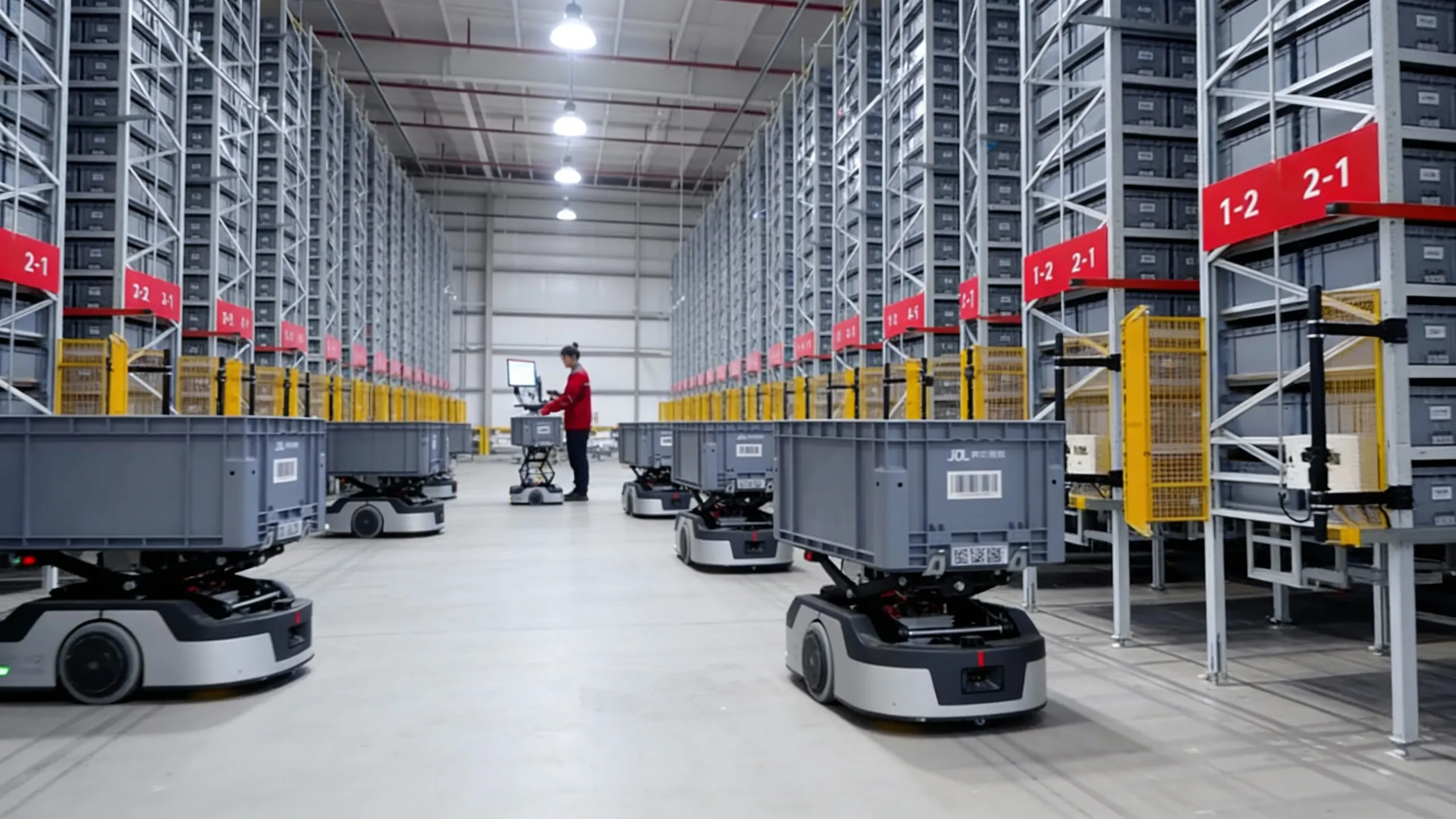
While upstream players grapple with tariffs and sailing schedules, a logistics technology revolution is quietly transforming the consumer experience. The 2025 peak season saw the operational launch of JD Logistics' first overseas "Smart Wolf Warehouse" in the UK, a prime example of this "intelligent evolution."
This 3,000+ square meter facility, deploying nearly 200 autonomous mobile robots, utilizes a "goods-to-person" model. It boosts picking and outbound efficiency by approximately four times compared to traditional warehouses. This isn't just about speed; it's a redefinition of experience. It enables same-day delivery for local orders, perfectly meeting the urgent demands of the holiday season.
At the final delivery level, consolidation and stability go hand in hand. In Germany, DHL commands roughly 75% of the peak-season parcel delivery market, demonstrating powerful network effects. In the US, the Postal Service (USPS) maintained normal delivery even on Christmas Eve and New Year's Eve to handle the holiday surge. This underscores that reliable, predictable final-mile delivery has become an inseparable part of the holiday shopping experience.
The Loadstar Observation
Competition in last-mile logistics has evolved from a "labor race" to a "technology race." Automated warehouses solve peak-season challenges like labor shortages and high error rates and enable precise inventory placement and rapid response through data-driven operations. For global brands, partnering with logistics providers that have access to or operate such smart logistics infrastructure is key to enhancing customer satisfaction and building brand loyalty.
IV. Insights and Response: Embrace Certainty, Invest in Agility
The 2025 holiday logistics transformation reveals the core challenge of future supply chain management: how to create maximum certainty within an uncertain global environment.
1. Planning Must Be Proactive: Rhythms Must Be Reshaped: Christmas sourcing now begins mid-year or earlier—this is the new normal. Companies must establish a supply chain calendar based on dual policy and market early-warning systems, forging deep, collaborative planning partnerships with their logistics providers to navigate these compressed and front-loaded cycles.
2. From Cost Center to Value Engine: Logistics decisions can no longer focus solely on "finding the lowest rate." The value of shipping reliability, network diversity, and last-mile speed and experience—which secure sales and elevate brands—is increasingly outweighing pure freight cost. Investing in higher-quality, smarter logistics is an investment in predictable growth.
3. Choose an Ecosystem Partner, Not Just a Carrier: Today's challenges require integrated solutions: the agility to "race the window" with China's supply chain rhythm, the global multimodal capability to develop new markets, and access to efficient overseas warehousing and fulfillment technology. What businesses need is an ecosystem partner offering panoramic supply chain insight and holistic solutions.
*****************************************************************************************************************************************************************************************************************************************************
The holidays will end, but the trajectory of change is now clear. Global logistics is moving beyond a crude, reactive old model into a new era defined by data-driven, globally optimized, and agilely responsive operations. For all participants, only by understanding these trends and proactively adapting can they find their strongest voice in the next chapter of global trade.