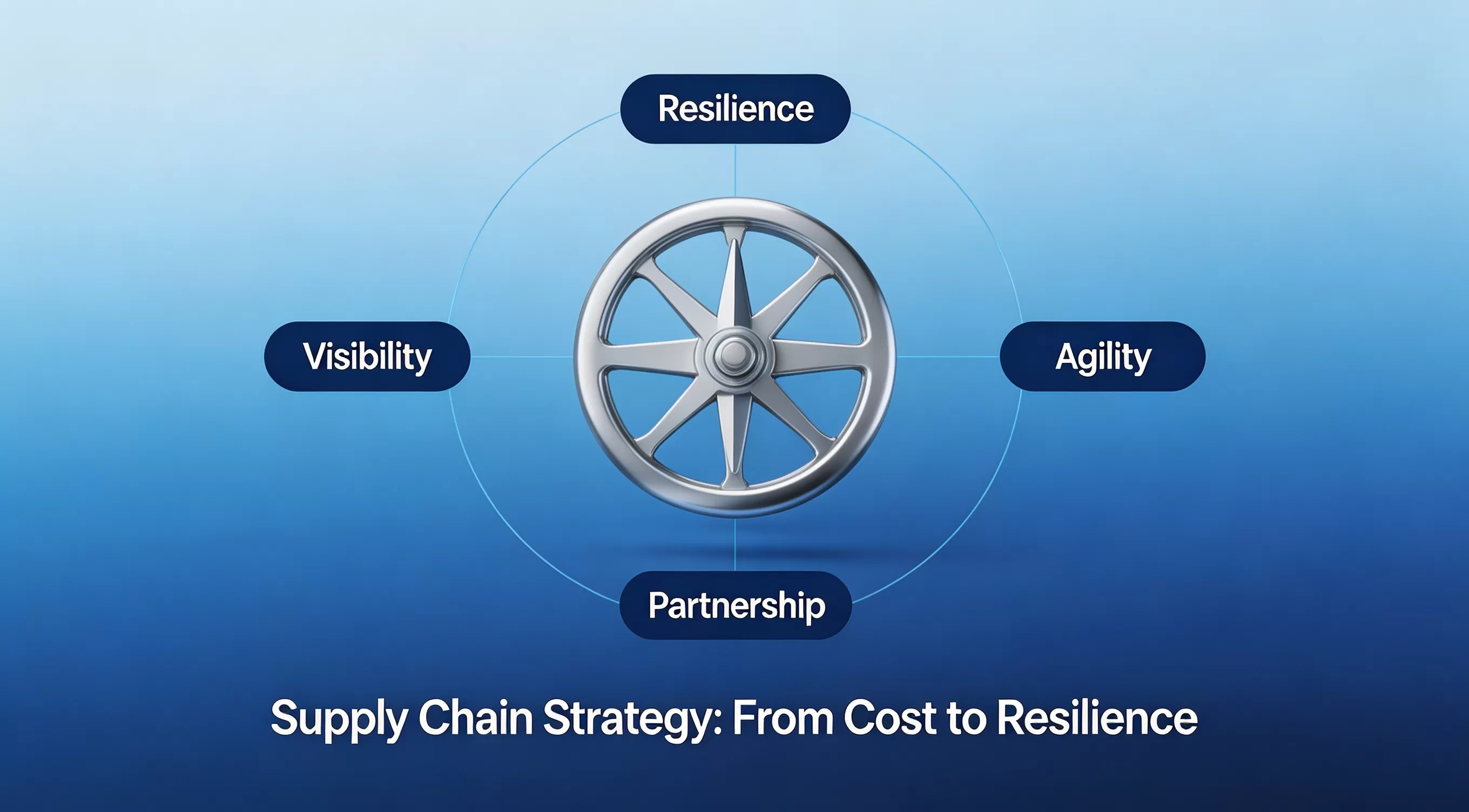
When uncertainty itself becomes the only certainty, global logistics is shifting from a reactive crisis management mode to a proactive, data-driven, resilience-first paradigm. As the second quarter of 2026 begins, multiple signals point clearly in one direction: heightened compliance, persistent volatility, and full digitalization are collectively defining the next decade of global supply chains.
Recent authoritative reports and industry events have released critical signals. From 86% of professionals in the Agility Emerging Markets Index expecting higher volatility, to thousands of containers forced into re-export under U.S. Customs' "5H" inspections; from the EU Digital Product Passport entering its 90-day countdown to the structural divergence between freight rates and port congestion revealed by Drewry data — these seemingly scattered developments together paint a complete picture of transformation.
I. Macro Landscape: Volatility as the "New Normal," Strategic Focus Shifts to Resilience
The World Economic Forum's Global Trade Outlook Report 2026 notes that global supply chains are moving from "recovery mode" to "recalibration mode." A survey of over 3,500 supply chain executives confirms that modern logistics has evolved from a traditional "cost center" into a "strategic growth driver."
Key Shifts:
-
Supply chain strategies are moving from "lowest-cost pursuit" to "risk-based optimization"
-
Core variables focus on three areas: tariff policies, energy costs, and AI applications
-
Companies plan to invest more in supply chain visibility, multi-sourcing, and regionalization
The Agility Emerging Markets Index reinforces this trend: 86% of industry professionals expect higher volatility in 2026 and view current geopolitical and economic turbulence as the "new normal." The old mindset of long-term planning based on stable expectations is being replaced by a new logic of "high-frequency adjustment and rapid response."
II. Ocean Freight: Diverging Supply-Demand Dynamics, Cost Pressures and Volatility Coexist
Container shipping in 2026 is centered on two major variables: Red Sea route uncertainty and structural overcapacity in global vessel supply.
Key Data and Trends:
-
If Red Sea diversions continue, Asia-Europe capacity growth will be relatively moderate at around 4% in 2026. If the Suez route reopens, total capacity could rise by an additional 8% from current levels, raising concerns about oversupply and downward rate pressure.
-
Middle East route capacity is gradually recovering, but port congestion and fuel costs remain challenges.
-
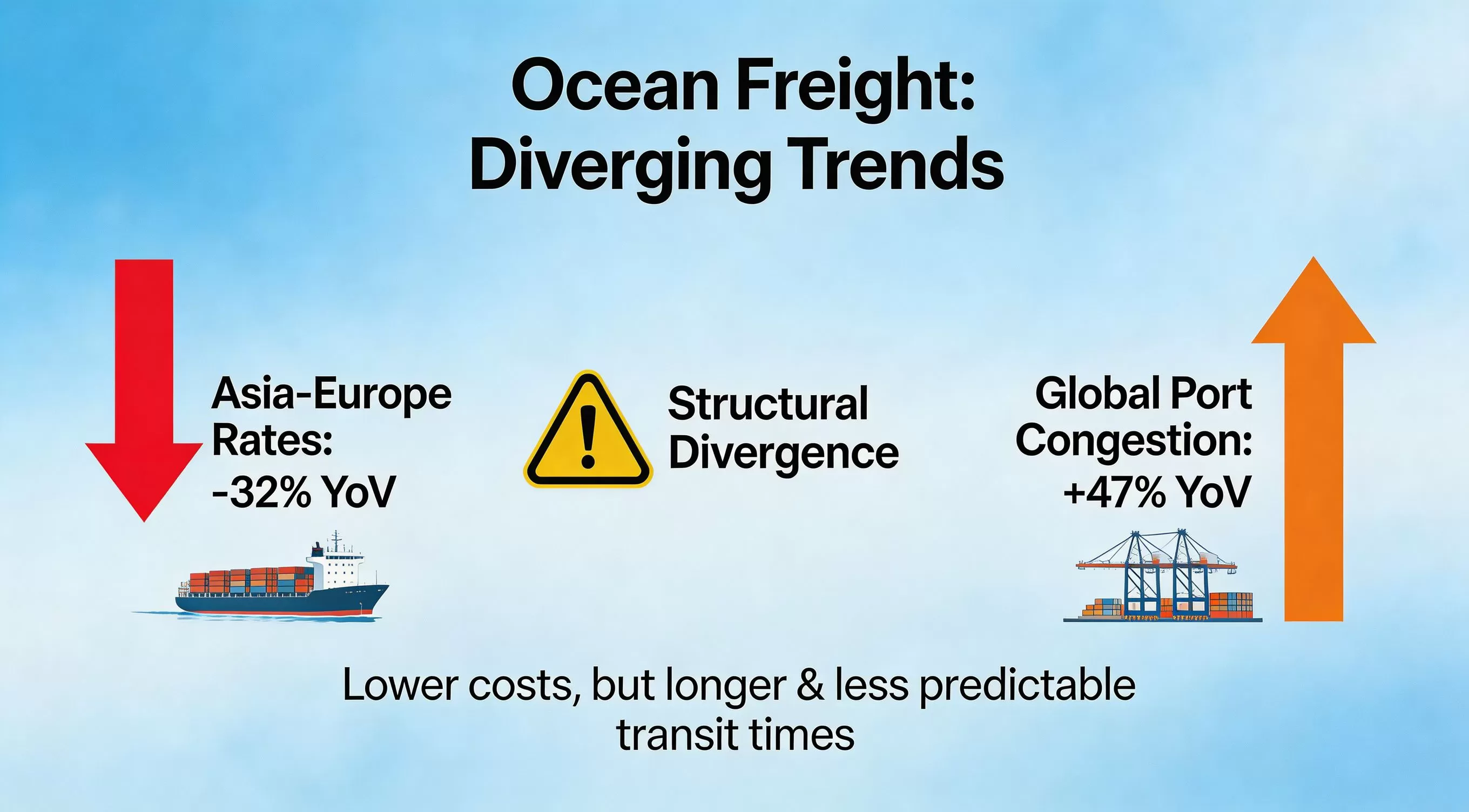
Recent Drewry data shows Asia-Europe freight rates down 32% year-on-year, while the Global Port Congestion Index has surged 47% year-on-year — a structural divergence between shipping costs and delivery reliability.
Implications for Shippers:
This mismatch of "lower costs but worse transit times" demands more sophisticated supply chain planning. Simply chasing low freight rates can backfire: longer and less predictable delivery windows erode inventory turns and customer satisfaction.
III. Compliance Storm: US and EU Customs Scrutiny Intensifies
In the first quarter of 2026, U.S. Customs and Border Protection's "5H" special inspection program has become the most severe challenge for importers.
U.S. "5H" Storm Continues:
-
Inspection rates at Los Angeles and Long Beach have surged past 30%, reaching as high as 50% for sensitive categories
-
Data shows that 3,826 Chinese export containers triggered "5H" inspections in the past two months, of which 3,137 were forced into re-export — a rejection rate of 82%
-
The core target is "trade authenticity" verification, requiring five categories of documents: purchase contracts, domestic transport records, bank payment evidence, U.S. importer entity credentials, and legal representative identification
-
If documentation is questionable, CBP can issue a re-export order within 3–5 days, with no opportunity to cure deficiencies and no right to appeal
EU DPP Enters Final Countdown:
-
By July 19, 2026, the EU will establish a unified Digital Product Passport (DPP) registration center
-
The first product categories (batteries, electronics, textiles) exported to the EU must carry a compliant DPP
-
The logic of customs clearance will fundamentally change: scan the passport first; only after verification can goods enter
-
Starting April 10, the EU will also strictly enforce a digitized border control system that automatically records each entry and exit of non-EU citizens, affecting logistics, after-sales, and other operations that rely on cross-border personnel movement
IV. Cross-Border E-commerce Logistics: From "Optional" to "Core Strategy"
The 2026 Government Work Report explicitly calls for "promoting the expansion, upgrade, and orderly development of the cross-border e-commerce plus overseas warehouse model." This policy directive marks overseas warehousing as a "main track" encouraged by policy, not just an industry option.
Market Data:
-
Global cross-border e-commerce market size is expected to exceed $7 trillion in 2026
-
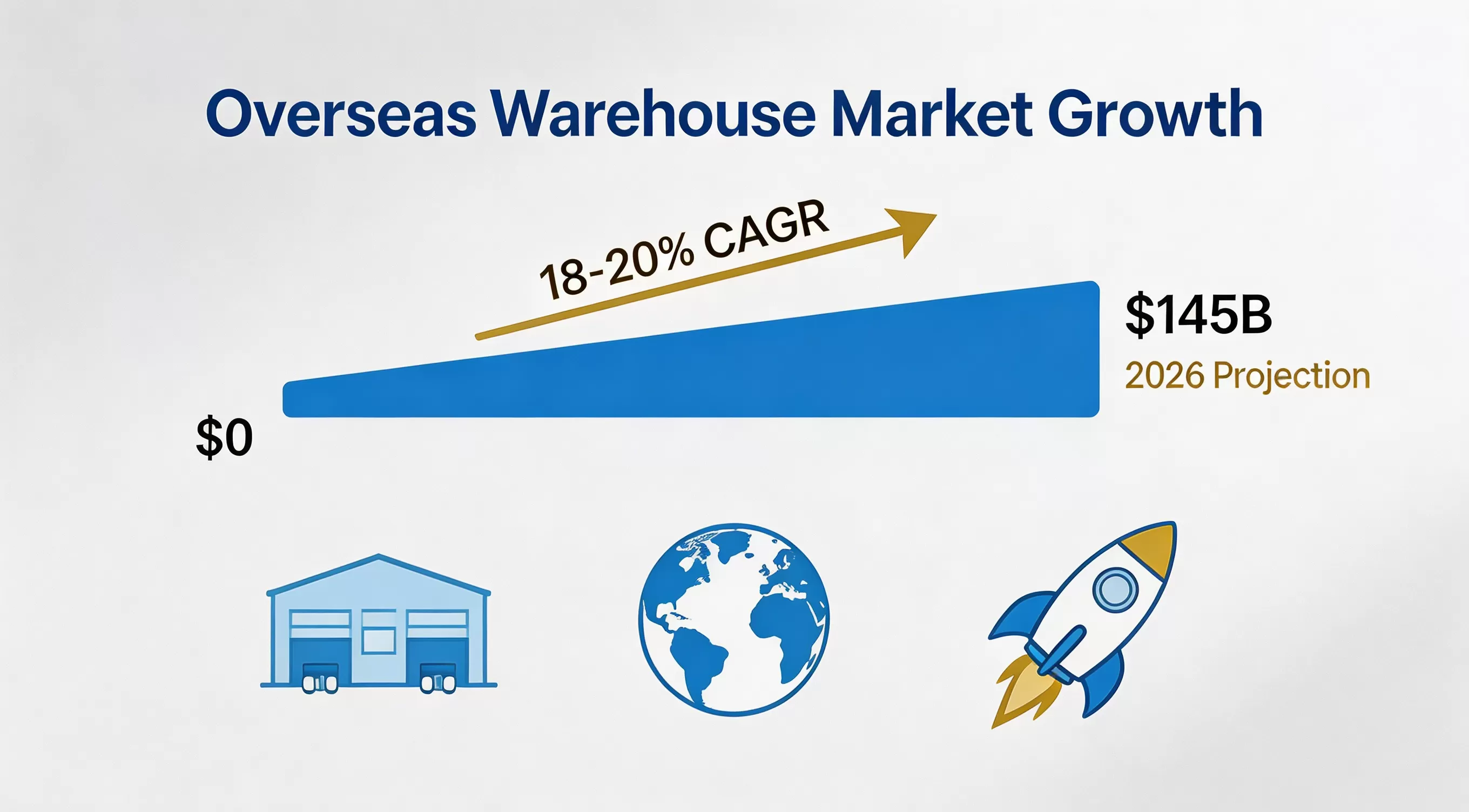
The overseas warehouse market is projected to surpass $145 billion, with a compound annual growth rate of 18%–20%
Trend Interpretation:
"Expansion and upgrade" means policy focus is shifting from simply increasing warehouse count to optimizing layout structure, enhancing value-added services, and promoting digital and intelligent upgrades. "Orderly development" signals that compliance barriers will rise, and operations in gray areas will face increasing risk.
For sellers, overseas warehousing is no longer a question of "whether to use it," but a strategic choice of "how to use it well and in compliance."
V. Digitalization: From "Differentiator" to "Entry Ticket"
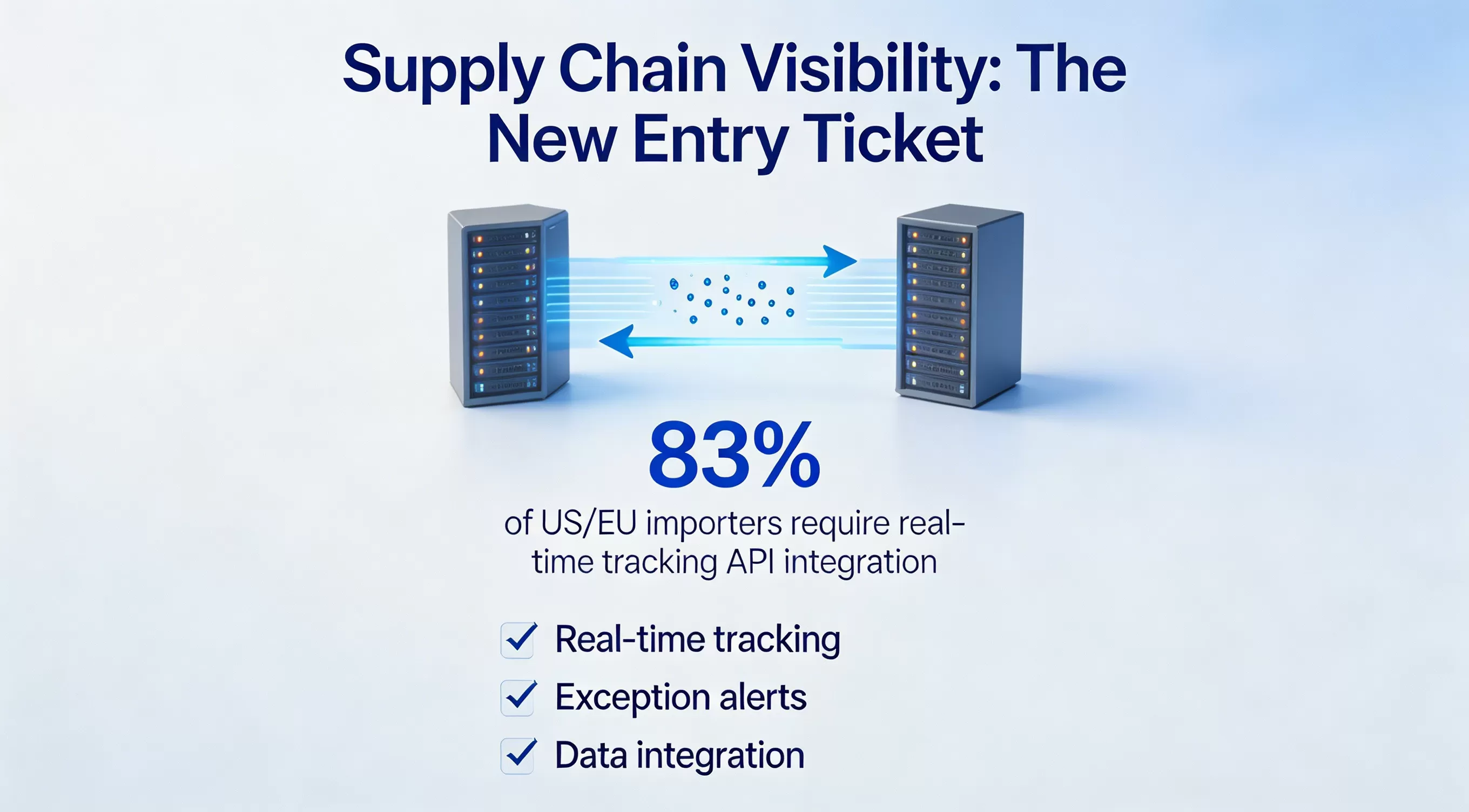
A recent Drewry survey found that 83% of U.S. and European importers now consider real-time logistics tracking API integration on suppliers' websites a new vendor selection criterion. This means purchasing decisions are shifting from "price first" to "supply chain visibility first."
Key Changes:
-
End-to-end digitalization will no longer be a competitive advantage but a baseline requirement for international transport management
-
Logistics providers that cannot offer real-time tracking, data integration, and exception alerts will gradually be eliminated
-
Data-driven inventory management, demand forecasting, and route optimization are becoming core competencies
LOADSTAR SHIPPING Perspective & Recommendations
As the second quarter of 2026 begins, the core theme is clear: global logistics is accelerating into a new era defined by heightened compliance, persistent volatility, and full digitalization.
Three Recommendations for Shippers and Sellers:
1. Front-Load Compliance – Be Proactive, Not Reactive
Integrate customs documentation preparation (for U.S. "5H" inspections) and product data traceability (for EU DPP) into your pre-shipment standard operating procedures. The second quarter is your window of opportunity. Don't wait until the peak season to scramble. Start an internal compliance audit now and partner with logistics providers that offer pre-screening capabilities to ensure every shipment has "complete documentation and verifiable data."
2. Diversify Your Supply Chain – Reduce Single Points of Failure
Amid ongoing Red Sea tensions and geopolitical uncertainty, building a multi-channel logistics contingency plan (e.g., ocean + rail, direct + transshipment, multiple last-mile carriers) is more critical than ever. Evaluate alternatives such as China-Europe rail and air-sea solutions, and work with your logistics partner to develop a "Plan B."
3. Invest in Digital Capabilities – Embrace Transparency
With logistics tracking APIs becoming a vendor selection standard, end-to-end visibility is now a baseline requirement for competitiveness. Prioritize logistics partners that offer real-time tracking, data integration, and exception alerts, and incorporate supply chain visibility upgrades into your internal systems roadmap.
Markets will always face turbulence. True competitive advantage lies not in finding the lowest freight rate, but in securing reliable delivery and predictable service amid uncertainty. In this new era of heightened compliance, rising costs, and digital transformation, LOADSTAR SHIPPING is committed to being your guide — interpreting the rules, providing early warnings, and optimizing your path forward.
Have questions about how these trends impact your supply chain? Contact the LOADSTAR SHIPPING team for tailored compliance and logistics optimization solutions.